
Working Hours
Daily from 10:00 AM to 12:00 AM
Working Hours
Send Us a Message
Call Us
Visit Us
Herniated Disc Symptoms: How to Recognize Them and When to See a Doctor
Discover practical rehabilitation insights from our specialists.
September 21, 2026
Learn about lumbar and cervical herniated disc symptoms, including pain, numbness, and muscle weakness, and find out when you should see a doctor or seek urgent medical care.
Herniated disc symptoms vary from one person to another depending on the location of the affected disc, the degree of nerve irritation or compression, and the person’s general health. Some people feel pain in the lower back or neck, while others experience pain that travels into the leg or arm. Numbness, tingling, or weakness in specific muscles may also occur.
Not everyone with a herniated disc has symptoms. Disc changes may be present without pain or a noticeable effect on movement. Understanding the possible symptoms can help you seek appropriate assessment, but a clinical examination is still important when pain persists or neurological symptoms develop.
To learn more about physiotherapy and rehabilitation programs, visit Miami Physiotherapy and Rehabilitation Center services, or contact the center and book an appointment for an assessment.
The spine consists of vertebrae separated by flexible discs that help absorb shock and support movement. Each disc has a softer inner material surrounded by a stronger outer layer.
A herniated disc occurs when part of the inner material pushes through a weak or torn area in the outer layer. The bulging material may irritate or compress a nearby nerve, causing pain, numbness, or weakness in the area supplied by that nerve.
A herniated disc most commonly occurs in the lumbar spine, in the lower back, but it may also occur in the cervical spine, in the neck. The pattern of symptoms depends on the location of the disc and the affected nerve.
Herniated disc symptoms may appear as one symptom or a combination of symptoms, including:
•Pain in the lower back or neck.
•Pain that travels to the buttocks, thigh, leg, or foot.
•Pain that travels from the neck to the shoulder, arm, or hand.
•Numbness or tingling in the leg, foot, arm, or hand.
•Weakness in specific muscles.
•Difficulty walking, standing, or carrying objects in some cases.
•Difficulty bending, straightening the back, or moving the neck.
•Pain that increases with certain movements, coughing, or sneezing in some people.
Symptoms may affect one side of the body more than the other, particularly when one nerve is compressed. Medical sources such as Mayo Clinic explain that pain, numbness, or weakness may travel into the arm or leg depending on the location of the disc and the affected nerve.
A lumbar herniated disc affects the vertebrae in the lower back and may cause symptoms in the back, buttocks, or leg. Possible symptoms include:
Pain may be felt in the middle of the lower back or on one side. It may become worse after sitting for long periods, bending, lifting objects, or making certain sudden movements.
Pain may move from the lower back to the buttocks, thigh, leg, and foot. This type of pain is commonly called sciatica when it is related to irritation of the sciatic nerve.
The pain may be sharp, burning, or feel like an electric shock. It may increase with coughing, sneezing, or physical effort in some cases.
A person may feel numbness or tingling in part of the leg or foot. The affected area varies according to the nerve that is irritated or compressed.
Weakness may appear as difficulty lifting the front of the foot, unsteadiness while walking, or difficulty standing on the toes or heels. Progressive weakness requires medical assessment, particularly when it is accompanied by loss of sensation or a clear change in movement.
A cervical herniated disc occurs in the neck and may affect nerves that travel toward the shoulder, arm, and hand. Symptoms may include:
•Neck pain, which may occur on one side.
•Stiffness or difficulty moving the neck.
•Pain that travels to the shoulder or arm.
•Numbness or tingling in the arm, hand, or specific fingers.
•Weakness in the arm or hand muscles.
•Difficulty lifting or gripping objects.
•Dropping objects in some cases because of muscle weakness.
Pain may worsen with neck movement, coughing, or sneezing. Not every case of neck pain is caused by a herniated disc; muscle strain, joint problems, or an unsuitable sitting posture may also be responsible.
Read Neck Pain from Desk Work: A Daily Routine for Prevention and Improvement to learn ways to reduce neck strain during work and sitting.
Not necessarily. Symptoms may come and go or appear only with certain postures and movements. They may gradually improve with appropriate treatment and activity modification. Some people may have a herniated disc without noticeable symptoms.
The duration and intensity of pain depend on several factors, including the location of the disc, the degree of nerve irritation, muscle strength, daily activities, and other health conditions. The severity of a condition cannot be determined by pain intensity alone.
Muscle strain and a herniated disc can feel similar, but some features may help provide an initial distinction.
With muscle strain, pain is often limited to a specific area of the back or neck. Symptoms related to a herniated disc may travel into the leg or arm.
Numbness or tingling is not usually a main feature of muscle strain, although it may be limited by pain and reduced movement. When a nerve is irritated or compressed, numbness or tingling may follow a specific path in the leg or arm.
A person may feel temporarily weak because of muscle pain or reduced movement. However, weakness associated with a herniated disc may be related to nerve irritation or compression and requires assessment, particularly if it is progressive or affects walking or hand use.
Muscle strain usually feels like tightness, stiffness, or localized soreness. Nerve-related pain may feel burning, like an electric shock, or may travel into the leg or arm.
See a doctor or healthcare professional if muscle pain persists or worsens. Assessment is also recommended when radiating pain, numbness, or weakness is present because these symptoms may require a physical or neurological examination.
This comparison is not a self-diagnosis tool. Different conditions can produce similar symptoms, and identifying the cause may require an appropriate medical or neurological assessment.
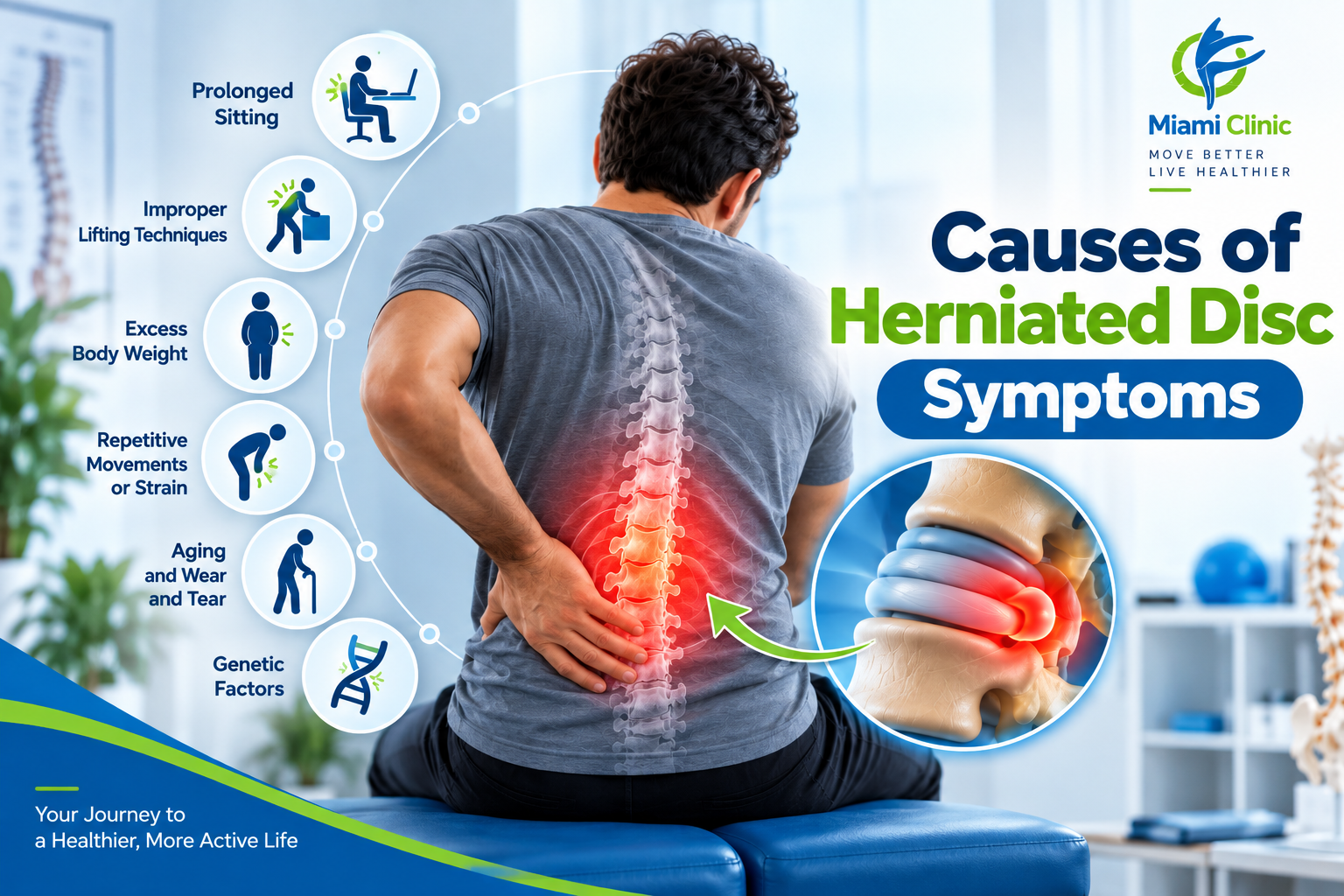
Herniated disc symptoms are not always caused by one specific movement. The condition or its symptoms may be associated with several factors, including:
•Natural age-related changes in the discs.
•Lifting weights with poor technique.
•Bending or twisting while carrying a heavy object.
•Sitting or driving for long periods.
•Weak abdominal and back muscles.
•Low levels of physical activity.
•Excess body weight, which may increase the load on the spine.
•Repetitive physical effort or work involving pushing, pulling, or bending.
•Smoking, which may affect disc and tissue health.
•Certain injuries or accidents.
In some cases, the cause is not clear. The presence of pain does not necessarily mean that the patient made one specific mistake or that the condition was caused by a single movement.
You should see a doctor or healthcare professional if back or neck pain does not improve, if pain travels into an arm or leg, or if it is accompanied by numbness, tingling, or weakness. Assessment is also recommended when pain affects walking, sleep, work, or daily activities.
Seek medical advice if:
•Pain continues for several weeks without improvement.
•Prescribed or otherwise appropriate pain relief is not helping.
•Numbness is recurrent or becoming more frequent.
•Weakness develops in an arm or leg.
•Pain is worse at night or is accompanied by fever or unexplained weight loss.
•A swelling or lump appears in the back.
•Pain begins after an accident or serious injury.
A physician may examine movement, strength, and sensation, and may request imaging or an MRI when appropriate. Imaging is not needed for every case of back pain; the physician determines its value based on the symptoms and examination findings.
Some symptoms require urgent medical care because they may indicate severe nerve compression. Go to the emergency department immediately if back pain is accompanied by:
•Numbness around the buttocks or genitals.
•Inability to urinate or sudden difficulty starting urination.
•Loss of bladder or bowel control.
•Loss of sensation in one or both legs.
•Severe or progressive weakness in the legs.
•Symptoms that begin after a serious accident or major injury.
Do not wait for these symptoms to improve on their own, and do not rely on physiotherapy sessions or pain medication alone before receiving urgent assessment. The NHS guidance on slipped discs identifies loss of bladder or bowel control, numbness around the genital area, and loss of sensation in the legs as warning signs requiring emergency care.
Assessment begins with questions about when the pain started, where it is located, what it feels like, and whether it travels into the arm or leg. The healthcare professional may ask about movements that increase symptoms, previous injury or physical effort, and the effect of the problem on sleep, walking, and work.
The examination usually includes assessment of:
•Range of motion.
•Muscle strength.
•Sensation.
•Neurological reflexes.
•The ability to perform certain movements.
This may help determine whether symptoms are related to nerve irritation or another problem. A physician may request an MRI or other tests when symptoms persist, neurological signs appear, or the cause is unclear.
Imaging findings should be interpreted together with the symptoms and physical examination. A disc change on an image does not always mean that it is the cause of pain.
Physiotherapy may help reduce pain, improve movement, strengthen muscles, and support a gradual return to daily activities. The plan varies according to the symptoms and assessment findings and may include:
•Appropriate mobility and flexibility exercises.
•Strengthening exercises for the abdominal, back, and core muscles.
•Education on sitting, standing, and sleeping posture.
•Training in safer ways to bend and lift objects.
•Manual therapy when appropriate.
•Supportive treatment methods selected by the therapist.
•Monitoring pain, strength, and movement and adjusting the plan when needed. Miami Physiotherapy and Rehabilitation Center explains that programs for lumbar and cervical herniated discs may include therapeutic exercises, manual therapy, and spinal traction techniques when appropriate and after assessment and review of the diagnosis.
Do not begin random exercises when radiating pain, numbness, or weakness is present. The same exercise may not be suitable for every condition. You can also read Low Back Pain: A Safe Movement Plan for Recovery for general guidance on gradual movement, while remembering that persistent symptoms require individual assessment.
The following general steps may help reduce back and neck strain as long as they do not worsen your symptoms:
•Avoid prolonged bed rest and maintain gentle, gradual movement.
•Change your sitting position regularly and avoid sitting continuously for long periods.
•Use a safe lifting technique by bending your knees and keeping the object close to your body.
•Avoid sudden movements and twisting while lifting weights.
•Do not begin intense exercises without assessment, particularly when pain travels into the leg or arm.
•Ask a doctor or pharmacist before taking pain medication, especially during pregnancy, with chronic health conditions, or when taking other medications.
•Seek assessment if numbness increases or new weakness appears.
Miami Physiotherapy and Rehabilitation Center provides programs for lumbar and cervical herniated discs. The plan begins by reviewing symptoms and medical history, then assessing movement, strength, pain levels, and the daily activities affected by the condition.
Depending on the assessment, the plan may include therapeutic exercises, manual therapy, or spinal traction techniques when appropriate. The center’s three-dimensional spinal traction device is used for suitable cases after assessment and review of the diagnosis, not automatically for every patient.
To learn more about the center’s approach and branches, visit the Miami Clinic About page. To book an appointment at the Dokki, Miami, or Moharam Bek branch, contact Miami Clinic.
The most common symptoms include lower-back or neck pain, pain that travels into the leg or arm, numbness or tingling, and weakness in certain muscles. Some people may have no symptoms.
Not necessarily. Numbness may result from neurological, muscular, or other conditions. Recurrent numbness, especially when accompanied by radiating pain or weakness, requires appropriate medical assessment.
Not every case of leg pain is caused by a herniated disc. Leg pain has many possible causes. However, pain that travels from the lower back into the leg with numbness or tingling may indicate irritation of the sciatic nerve or another nearby nerve.
Symptoms may include neck pain, pain that travels to the shoulder or arm, numbness or tingling in the hand, weakness in the arm or hand muscles, and difficulty gripping objects in some cases.
Symptoms may include lower-back pain, pain that travels to the buttocks or leg, numbness or tingling in the foot, weakness in the leg muscles, and difficulty walking or standing when nerves are affected.
No. Most cases do not require surgery and may improve with conservative treatment, physiotherapy, and monitoring. Progressive weakness, loss of bladder or bowel control, or numbness around the genital area requires urgent medical assessment.
Some light activities, such as gradual walking, may be appropriate if they do not increase pain or numbness. The type and intensity of exercise should be selected according to your condition. Stop exercising if new symptoms appear or existing symptoms worsen.
Herniated disc symptoms vary according to the location of the disc and the affected nerve. They may include back or neck pain, pain that travels into the leg or arm, numbness, tingling, or muscle weakness. One symptom alone is not enough to confirm a diagnosis because similar symptoms can occur with other conditions.
If pain persists or numbness or weakness appears, book an assessment instead of relying on self-diagnosis. If you experience loss of bladder or bowel control, numbness around the genitals, or severe and progressive weakness in the legs, go to the emergency department immediately.
You can book an assessment at Miami Physiotherapy and Rehabilitation Center to identify an appropriate treatment plan, while seeking urgent medical care whenever warning signs appear.