
Working Hours
Daily from 10:00 AM to 12:00 AM
Working Hours
Send Us a Message
Call Us
Visit Us
Causes of Lower Back Pain: Symptoms, Diagnosis, and When to See a Doctor
Discover practical rehabilitation insights from our specialists.
October 28, 2026
Learn about the causes of lower back pain, from muscle strain and herniated discs to sciatica and joint problems, including warning signs, diagnosis, and the role of physiotherapy.
Lower back pain is one of the most common health problems. It may appear after a sudden movement or lifting a heavy object, or it may develop gradually because of prolonged sitting, muscle weakness, or repeated physical effort. In many cases, pain improves within a few weeks with appropriate movement and gradual self-care. Sometimes, however, it is related to the vertebrae, nerves, or joints and requires specialist assessment.
Not every case of lower back pain is caused by a herniated disc. The cause may be a simple muscle strain, irritation of the spinal joints, or pain referred from another area. Understanding the accompanying symptoms, when the pain began, and which movements make it worse can help determine the next appropriate step.
Learn more about Miami Physiotherapy and Rehabilitation Center services, or book an appointment for a lower back pain assessment before starting any treatment program.
The lower back is the lumbar region between the bottom of the rib cage and the pelvis. It contains vertebrae, discs, joints, ligaments, muscles, and nerves that work together to support the body, move the trunk, and transfer force to the legs.
Pain may be felt in the middle of the lower back or on one side. It may spread to the buttocks, thigh, or leg when a nerve is irritated. For this reason, some people describe the problem as back pain even though part of the pain follows a nerve or comes from the pelvic joints.
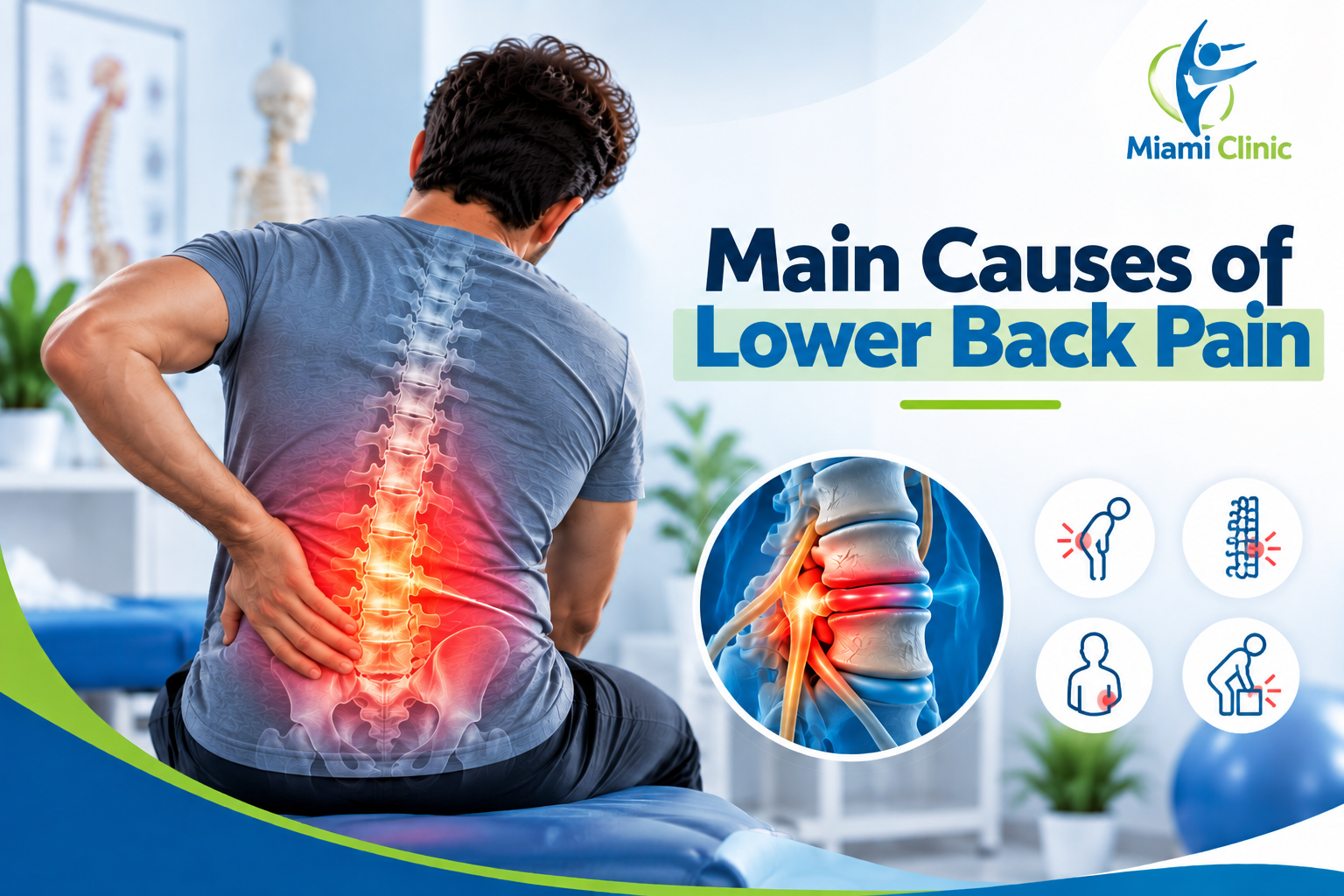
Muscle strain is a common cause of lower back pain. It may occur after lifting something heavy, twisting, bending suddenly, or doing more physical effort than usual. It may be accompanied by stiffness, muscle spasm, and temporary difficulty moving.
Pain may increase with certain movements and improve when the position changes. Many cases gradually improve with gentle movement and by reducing the activity that caused the pain, without the need for prolonged bed rest.
Sitting for long periods or repeatedly bending toward a computer or phone may increase the load on the back muscles and spinal joints. A single posture is not always the only cause, but limited movement and staying in the same position may increase sensitivity and reduce the back’s ability to tolerate activity.
Changing position, taking short breaks, walking gently, and adjusting the height of the desk and chair can reduce the daily load on the lower back.
The abdominal, pelvic, and back muscles work together to stabilize the trunk. Weakness or poor movement control may increase the effort placed on the lower back during bending, lifting, or walking. This does not mean that muscle weakness is always the only cause, but it may contribute to repeated pain or slower recovery.
Discs between the spinal vertebrae help absorb shock. A disc may bulge or tear and touch or press on a nearby nerve. This can cause lower back pain or pain that travels to the buttocks and leg, together with numbness, tingling, or weakness.
A disc bulge on an imaging scan is not always the cause of pain because it can appear in people without symptoms. MRI or X-ray findings should therefore be interpreted together with the examination and symptoms.
For more information, read Miami Clinic’s article about lumbar disc herniation treatment, when available on the English site.
Sciatica describes pain that follows the path of the sciatic nerve. It may travel from the lower back to the buttocks and the back of the thigh and leg. Burning, tingling, or numbness may occur, sometimes in only one leg.
Sciatica may result from a herniated disc, narrowing around the nerves, or another condition. Learn more about lower back pain and safe movement and seek an assessment if leg symptoms persist or worsen.
Age-related changes may affect the small joints between the vertebrae and cause stiffness or pain that increases with standing, walking, or certain movements. Osteoarthritis symptoms may overlap with other causes, so imaging alone is not enough to identify the source of pain.
Spinal stenosis occurs when the space available for the spinal cord or nerves becomes narrower. It may cause pain, numbness, or heaviness in the legs, especially when standing or walking for a period of time. Some people experience relative relief when sitting or leaning forward.
Pain may come from the joint connecting the lower spine to the pelvis or from the hip, then be felt in the lower back or buttocks. It may increase when climbing stairs, standing on one leg, or changing position.
Osteoporosis can weaken the vertebrae and increase the risk of a fracture, sometimes after a minor injury or an ordinary movement. Sudden, persistent pain after a fall or in a person with osteoporosis requires medical assessment.
In a small number of cases, lower back pain may be related to an infection, inflammatory disease, or another condition requiring medical assessment. Fever, chills, unexplained weight loss, or severe fatigue together with back pain should not be managed with home treatment alone.
Pain in the lower back may sometimes be related to a kidney, pelvic, or abdominal problem, particularly when it occurs with painful urination, blood in the urine, digestive symptoms, or symptoms associated with the menstrual cycle. In such cases, physiotherapy should not be the first step before the medical cause is assessed.
Symptoms vary according to the cause and may include:
Localized pain in the middle of the lower back.
Stiffness after waking up or sitting.
Muscle spasm or tightness in the back.
Pain that increases with bending, twisting, or lifting.
Pain that spreads to the buttocks, thigh, or leg.
Tingling or numbness in the leg or foot.
Weakness in the leg muscles or difficulty walking.
Pain that becomes worse at night or does not improve with rest.
Difficulty performing daily activities.
According to Mayo Clinic’s information on back pain, back pain may feel like a muscle ache, burning, or stabbing sensation and may radiate to one or both legs. Bending, twisting, lifting, standing, or walking may make it worse .
Muscle strain pain tends to remain in or around the lower back and may be accompanied by stiffness or tenderness during movement or pressure over the muscles. Nerve pain may spread to the buttocks and leg and may include numbness, tingling, burning, or weakness.
This distinction is not absolute, and both types of pain may occur at the same time. Pain that spreads into the leg or is accompanied by changes in sensation or strength should be assessed.
Seek urgent medical assessment if back pain is accompanied by any of the following:
Increasing or significant weakness in one or both legs.
Numbness or loss of feeling around the genitals or anus.
New difficulty urinating or loss of bladder or bowel control.
Pain, numbness, or weakness in both legs.
Severe pain that begins suddenly or worsens quickly.
Fever, chills, or feeling generally unwell.
Pain after a serious accident or fall.
Unexplained weight loss.
A lump, swelling, or clear change in the shape of the back.
Severe pain that does not improve or becomes worse at night.
NHS guidance on back pain recommends emergency care when there are changes in urination or bowel movements, loss of sensation around the genitals or anus, symptoms in both legs, or back pain after a serious accident. These signs may indicate significant nerve compression or another condition requiring urgent treatment.
Assessment is recommended if:
Pain continues for several weeks without improvement.
Pain prevents work, sleep, or daily movement.
Pain keeps recurring.
Pain travels into the leg or is accompanied by numbness or tingling.
You have difficulty climbing stairs, walking, or carrying objects.
You have had a back injury or surgery.
You have osteoporosis or take medicines that affect bone health.
You are worried or cannot identify what is causing the pain.
Not every case requires an MRI or X-ray. A professional decides which tests are appropriate based on the symptoms, clinical examination, and presence of warning signs.
Diagnosis begins with questions about the location and onset of pain, movements that increase it, and accompanying symptoms such as numbness, weakness, or urinary problems. The assessment may include:
Evaluation of back and pelvic posture.
Assessment of range of motion and the ability to bend and walk.
Testing the strength of the leg muscles.
Checking sensation and reflexes when necessary.
Assessing hip and pelvic joint movement.
Evaluating the ability to perform everyday movements.
A doctor may order an X-ray when a fracture or bony change is suspected. An MRI or CT scan may be used when the discs, nerves, or other tissues need to be assessed. Blood tests may be requested when infection, inflammatory disease, or another general condition is suspected.
Mayo Clinic explains that assessment may include checking the ability to sit, stand, walk, and lift the legs. MRI or CT scans may help identify problems affecting discs, bones, muscles, and nerves when appropriate .
Treatment depends on the cause, symptom severity, and effect on movement. There is no single treatment plan suitable for every patient.
In many cases, gentle movement is better than prolonged rest. You can begin with short walks and gradually increase the duration according to your ability. Stop an activity that clearly increases pain, but do not avoid all movement because of fear of pain.
NHS guidance recommends avoiding prolonged bed rest and trying suitable movement and exercises, stopping them if symptoms become clearly worse.
Cold packs may help reduce pain and swelling after physical effort or a recent injury. Heat may help reduce stiffness or muscle spasm for some people. Wrap the pack in a towel and avoid placing it directly on the skin.
If you have reduced sensation or a circulation problem, ask a doctor or healthcare professional before using heat or ice.
A doctor or pharmacist may recommend a pain reliever or anti-inflammatory medicine depending on your condition. Do not use anti-inflammatory medicines without advice if you have an ulcer, kidney or heart disease, take other medicines, or are pregnant.
Medication does not always treat the cause of back pain, but it may reduce symptoms enough to allow movement and rehabilitation to begin.
Physiotherapy helps create a gradual program that matches the cause of pain and the patient’s current ability. It may include:
Mobility exercises for the lower back and pelvis.
Strengthening the abdominal, back, and pelvic muscles.
Safely improving flexibility.
Training in bending, lifting, and changing positions.
Improving balance and movement control.
A gradual return to work or sport.
Reducing the likelihood of recurring pain.
Mayo Clinic explains that a physiotherapist can teach exercises to improve flexibility, strengthen the abdominal and back muscles, improve posture, and modify movement during an episode of back pain while helping the patient remain safely active .
You can also read Miami Clinic’s article about a safe movement plan for lower back pain for general guidance on gradual movement, managing physical effort, and recognizing warning signs.
A physiotherapist may use manual therapy or selected supportive methods to reduce pain and improve joint and tissue movement as part of a program that also includes exercise and rehabilitation. Learn more about manual therapy at Miami Clinic and other treatment services selected according to the patient’s condition.
Traction may be used in selected spinal conditions after assessment, but it is not appropriate for every person or every cause of lower back pain. A professional determines whether it is suitable based on the examination and symptoms. Home traction devices should not be used without guidance.
You can learn more about Miami Clinic’s spinal traction service.
Most cases of lower back pain do not require surgery. A doctor may discuss surgery when there is ongoing nerve compression with increasing weakness, leg pain that does not improve with appropriate treatment, or a specific problem requiring repair.
A herniated disc seen on an MRI does not automatically mean that surgery is needed. The decision depends on the symptoms, examination, degree of weakness, and effect on the patient’s life.
A physiotherapist may choose exercises such as:
Gradual walking.
Gentle pelvic and lower-back movement.
Flexibility exercises for the thigh and pelvic muscles when appropriate.
Gradual strengthening of the abdominal and core muscles.
Exercises to control back posture during movement.
Exercises that support a return to work or activity.
No single exercise is appropriate for everyone. Stop exercising if pain becomes clearly worse or if new numbness, weakness, or pain spreading into the leg develops. Do not begin intense exercise or heavy weights during severe pain without assessment.
Maintain daily movement appropriate for your ability.
Increase physical effort and weights gradually.
Use safe lifting technique.
Keep the load close to your body and avoid twisting while lifting.
Take breaks from prolonged sitting.
Adjust the chair and screen height during desk work.
Strengthen the abdominal, pelvic, and back muscles with suitable exercises.
Do not rely on prolonged rest during every episode of pain.
Address back injuries early before returning to strenuous activity.
Seek assessment if pain recurs or neurological symptoms appear.
Miami Physiotherapy and Rehabilitation Center can assess and treat many lower back pain cases related to the muscles, joints, and spine, including muscle strain, muscle weakness, limited movement, selected cases of disc herniation, and spinal joint degeneration, according to the assessment and each patient’s condition.
The program begins by assessing pain intensity, range of motion, strength, walking pattern, and activities that worsen symptoms. The plan may include therapeutic exercise, gradual rehabilitation, manual therapy, supportive methods, or traction when appropriate. The goal is to reduce pain, improve movement, and help the patient perform daily activities more safely.
Physiotherapy does not replace urgent medical assessment when there is loss of bladder or bowel control, numbness around the genitals, increasing weakness, or pain after a serious accident. In these situations, urgent medical care should come first.
Learn more about Miami Clinic’s spinal care services, or book an assessment to determine the most suitable plan.
Choose the closest branch through the Miami Clinic branches page:
Address: 70 Mossadak Street, Dokki, opposite Vodafone.
Dokki branch details and booking
Address: 72 Moharam Bek Street.
Moharam Bek branch details and booking
Address: 248 Gamal Abdel Nasser Street, after Gehan Roundabout.
Miami branch details and booking
Address: 21 El Geish Road, the seaside road, next to Abdel Moneim Gaber Theatre, near El Shatby signal.
Kambishzar branch details and booking
Address: El Saraya Mall, next to Saudi Market, near Arkan.
Sheikh Zayed branch details and booking
For questions or booking, contact Miami Clinic at 0233362623 or use the contact and booking page. You can also contact the center via WhatsApp.
Common causes include muscle strain, prolonged sitting, muscle weakness, disc herniation, joint irritation, and spinal osteoarthritis. Less common causes include fractures, infections, and certain general medical conditions.
No. Lower back pain may come from muscles, joints, or ligaments without a herniated disc. Even when a disc bulge appears on imaging, it must be correlated with the symptoms and examination.
Prolonged bed rest is generally not recommended. Gentle movement and a gradual return to activity help many cases, while movements that clearly increase pain should be avoided.
It should be assessed if it persists or is accompanied by numbness, tingling, or weakness. Increasing leg weakness, loss of bladder or bowel control, or numbness around the genitals requires urgent care.
Physiotherapy may be appropriate for many muscle and joint problems and selected cases of disc herniation, but warning signs should be excluded first. A professional creates the plan after assessment and may refer the patient to a doctor when necessary.
Not every case of lower back pain requires an MRI. A doctor may request one when persistent neurological symptoms, weakness, suspected specific causes, or inadequate improvement make further assessment appropriate.
Many cases improve with conservative care, such as gradual movement, exercise, physiotherapy, and activity modification. Selected cases may require medical intervention or surgery when there is nerve compression, increasing weakness, or a condition that does not respond to appropriate treatment.
The causes of lower back pain are varied. Pain may result from muscle strain, repeated posture and movement, a herniated disc, nerve or joint irritation, or another problem requiring assessment. Gradual movement and physiotherapy help many cases, but weakness, numbness, changes in bladder or bowel function, or pain after a serious injury should never be ignored.
Miami Physiotherapy and Rehabilitation Center can assess and treat many lower back and spinal pain conditions and create a suitable movement, strengthening, and rehabilitation program. Patients are directed to medical care when symptoms indicate that urgent assessment is needed.
Book an appointment at the nearest Miami Clinic branch and begin with an appropriate assessment.